Underground work is unforgiving — hit an unmarked line under a Rusk driveway or a lease road out toward the oil patch, and a routine trench turns into an expensive, dangerous problem. Glass Finn LLC provides excavation and trenching services throughout Rusk and Cherokee County, digging foundations, utility trenches, drainage lines, and footings in the same red clay and sandy loam soil that makes this part of East Texas both workable and, if you don’t respect it, prone to trench wall collapse. Every job starts with a call to Texas811 to locate buried utilities before the first bucket of dirt moves, and every trench deeper than 5 feet gets proper sloping, shoring, or shielding — not because it’s optional, but because it’s the law and it’s how our crews come home safe. Call (903) 216-5316 for a free estimate.
What Excavation and Trenching Actually Involve
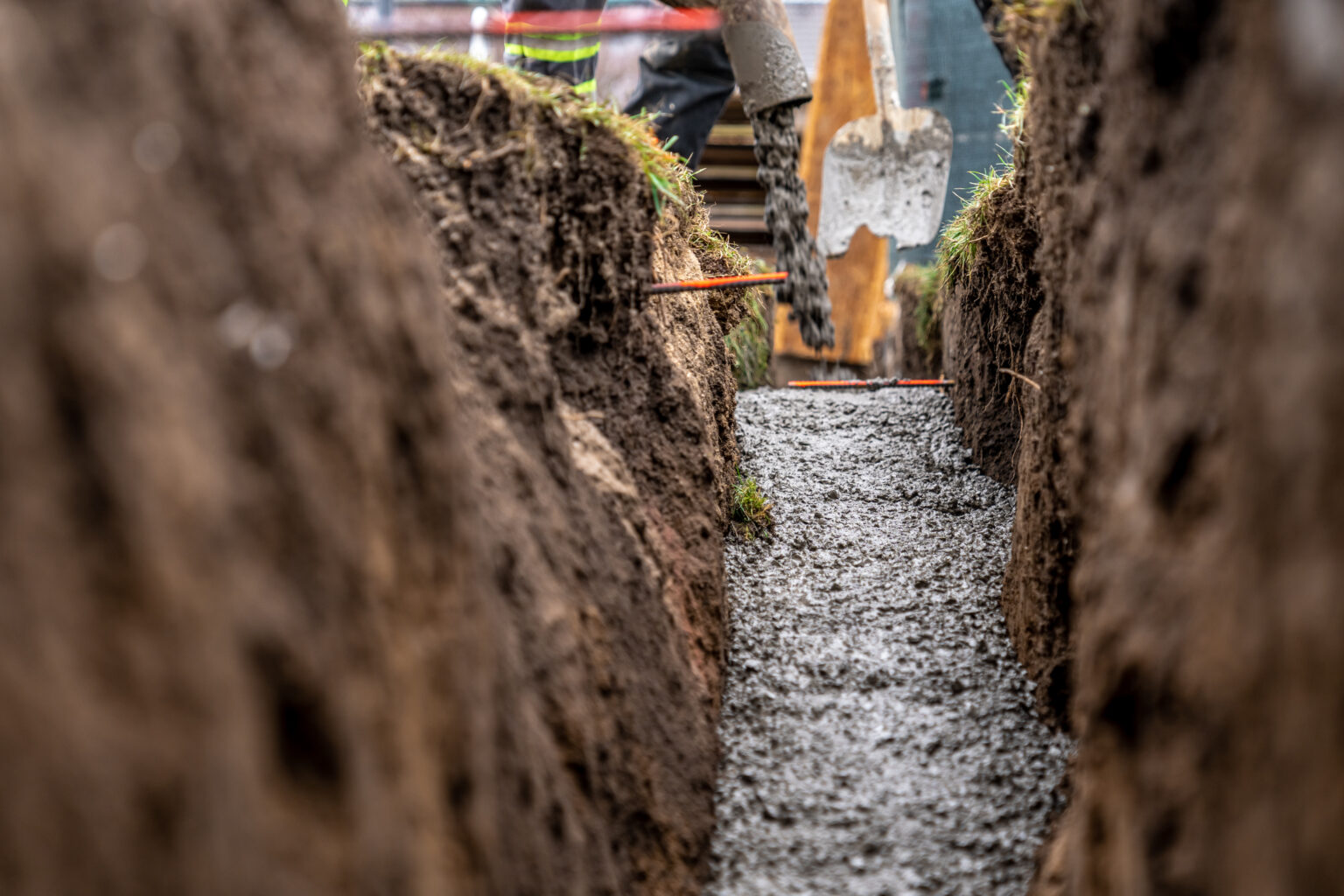
Excavation is the process of removing earth to create space below the existing ground surface — for a foundation, basement, pool, or footing — while trenching is a narrower, deeper form of excavation typically used to run utility lines, drainage pipe, or French drains. Before either starts on a Rusk property, most sites need the buried utilities marked: Glass Finn LLC contacts Texas811 as a standard part of every job, since a shallow drainage trench and a deep foundation dig both carry real risk of hitting an unmarked gas, water, or electric line. Once utilities are marked and confirmed, we bring in excavators for larger digs and trenchers or compact equipment for narrower utility runs, sized to the job — a footing excavation for a shop foundation calls for different equipment than a French drain trench along a driveway. For any trench 5 feet deep or greater, OSHA’s excavation standard requires a protective system — sloping the walls back, shoring them with hydraulic supports, or shielding with a trench box — and our crews classify the soil and apply the right protection before anyone works inside it, since Cherokee County’s clay-heavy soil doesn’t hold a vertical wall the way stable rock does. What starts as a job site with unknown ground conditions becomes a properly excavated, safely protected opening — footing dug to grade, utility line trenched to depth, or drainage path cut and ready for pipe — with the site left in a condition your next contractor can build on immediately.
Our Excavation and Trenching Process
Step 1 — Utility Locate and Site Assessment Before any equipment touches the ground, we call Texas811 to have all underground utilities marked and wait the required response window — typically two business days in Texas — while confirming the scope, depth, and layout of the dig with you. This step alone prevents the majority of serious excavation accidents, and we don’t skip it regardless of how routine the job looks.
Step 2 — Soil Classification and Protective System Planning For any trench expected to reach 5 feet or deeper, a competent person on our crew classifies the soil type — the clay-heavy ground common around Rusk generally falls into OSHA’s Type B or C categories, which require more conservative sloping or shoring than stable rock — and we plan the appropriate protective system before digging begins rather than improvising once the trench is open.
Step 3 — Excavation or Trenching With utilities marked and the protective plan set, we dig to the required depth and dimensions using excavators, trenchers, or compact equipment matched to the job. Spoil piles and equipment are kept at least two feet back from the trench edge to reduce the risk of them sliding back in or overloading the trench wall.
Step 4 — Shoring, Sloping, or Shielding Where the trench requires it, we install the protective system — sloped walls, hydraulic shoring, or a trench box — before any crew member enters, and we inspect the trench at the start of every shift and after any rain, since conditions in East Texas clay can change fast after a storm.
Step 5 — Backfill and Final Grade Once the utility line, footing, or drainage work is complete and inspected, we backfill in compacted layers rather than dumping it all at once, then bring the surface back to grade so the site is ready for the next phase — whether that’s a foundation pour, site prep and grading, or paving. The result is a properly dug, safely protected excavation that holds up long after the job is done, not just until the first hard rain.
Serving Rusk and the Surrounding Area
Glass Finn LLC handles excavation and trenching work across Cherokee County, from utility and drainage trenches on residential lots inside Rusk to footing and pad excavation for commercial and agricultural buildings out along US Highway 69 and State Highway 110. A meaningful share of the excavation and trenching work in this part of East Texas ties back to the region’s oil and gas activity — lease roads, well pad footings, and pipeline-adjacent trenching — where hitting a buried line carries even higher stakes than a typical residential dig. We treat every trench near a known easement or right-of-way with that in mind. To see more of our sitework across the region, visit the Glass Finn LLC homepage.
Soil conditions shift across the county, and that changes how a trench behaves. The sandy loam topsoil common around Rusk holds a slope reasonably well when dry, but the red clay subsoil underneath swells and becomes far less stable after Cherokee County’s heavy spring rains — part of why we classify soil and choose a protective system on a per-trench basis instead of applying the same approach to every dig.
Why Rusk Property Owners and Businesses Choose Glass Finn LLC
Glass Finn LLC brings 30 years of hands-on East Texas land and sitework experience to excavation and trenching projects for residential, commercial, farm, ranch, and oil industry clients across Cherokee County. Learn more about our background on our About page.
Every excavation and trenching job follows OSHA’s excavation and trenching standards, including required protective systems for trenches 5 feet deep or greater, and every job starts with a call to Texas811 to mark underground utilities before we dig. Trenching remains one of the most dangerous jobs in construction — an average of eight Texans a year have died in trenching accidents according to state safety data — and cutting corners on soil protection isn’t a risk we take to save a day on the schedule.
Every estimate is free, and we walk the site with you both before digging and after backfill to confirm the work meets what was agreed.