Cherokee County’s oil and gas activity doesn’t stop at the wellhead — spill-adjacent sites need cleanup support, well pads and lease roads need vegetation control, and disturbed ground needs to be brought back to a stable, revegetated condition once the work is done. Glass Finn LLC provides environmental services throughout Rusk and the surrounding East Texas oil patch, from land reclamation to right-of-way vegetation management on pipeline and lease properties across the company’s service area stretching from Cherokee County toward San Antonio. Our mulching and land management equipment handles vegetation control without open burning, and our crews work within the standards the Railroad Commission of Texas applies to oilfield land restoration. Call (903) 216-5316 for a free estimate on your environmental services project.
What Environmental Services Actually Involve
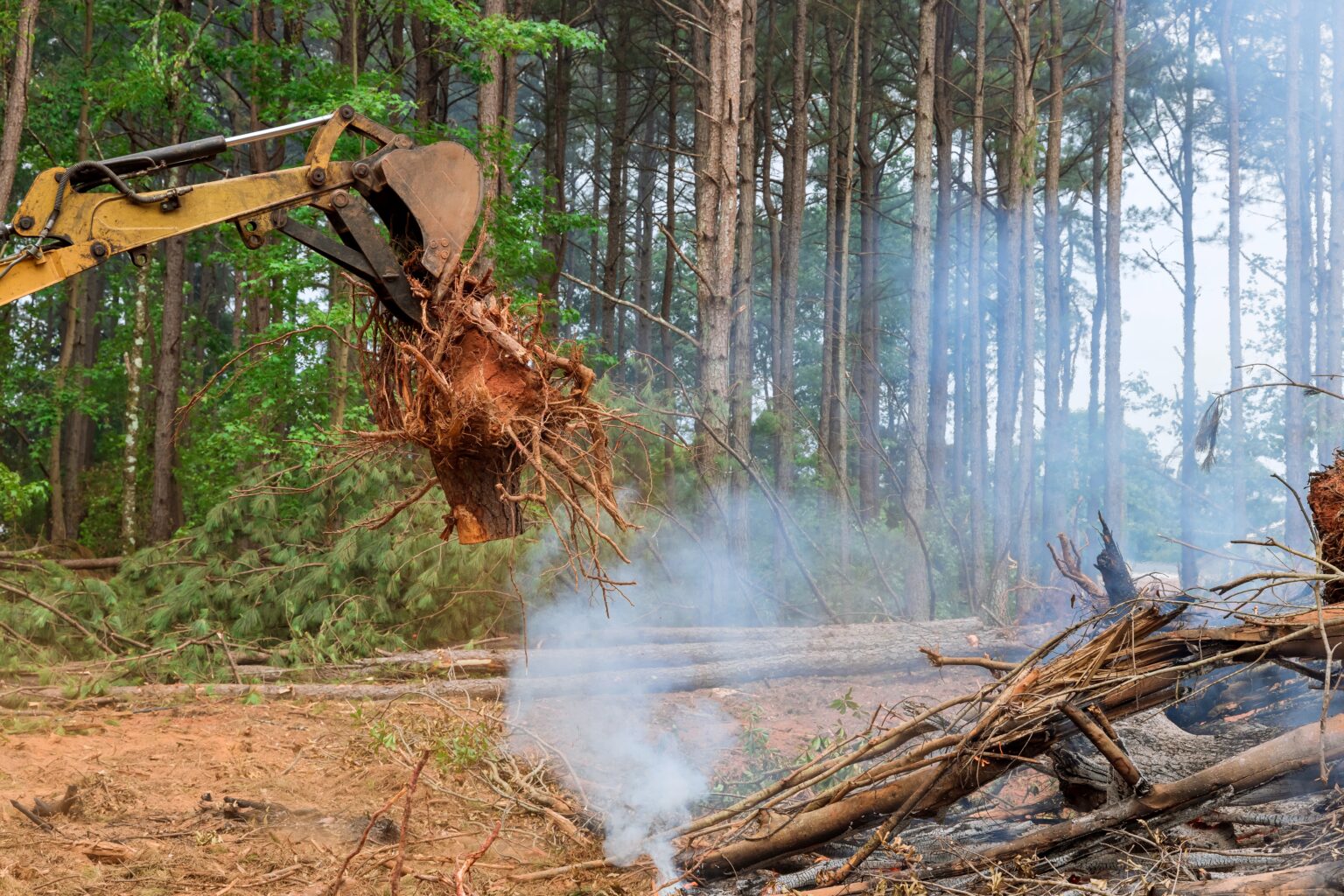
Environmental services in the oil and gas context cover the land-management work that happens before, during, and after drilling or production activity — clearing and grading well pads and access roads, managing vegetation along pipeline rights-of-way, and reclaiming and revegetating ground once a site is no longer in active use. Before reclamation work begins, a site typically needs to be assessed for existing disturbance, drainage patterns, and any contamination concerns that fall under the Railroad Commission of Texas’s cleanup standards, such as Statewide Rule 91 for crude oil and condensate spills. Glass Finn LLC’s forestry mulching equipment handles vegetation management on lease roads and pipeline rights-of-way without the open burning that traditional brush clearing relies on, which matters on active oil and gas sites where burn restrictions and fire risk are ongoing concerns. Once site work is complete, disturbed ground is graded and stabilized to support revegetation, using mulch and proper grading to control erosion rather than leaving bare, disturbed soil exposed to Cherokee County’s heavy spring rains. What starts as an active or recently disturbed well site, lease road, or right-of-way becomes stabilized, vegetated ground that meets the condition the site’s operator, landowner, or regulator expects.
Our Environmental Services Process
Step 1 — Site Assessment We start by walking the site with the landowner or operator to understand the scope of work — vegetation management on an active lease road, reclamation of a site no longer in production, or right-of-way maintenance along a pipeline easement — and to identify any existing disturbance, drainage issues, or known contamination that needs to be addressed.
Step 2 — Regulatory Coordination For sites tied to oil and gas activity, we work within the framework the Railroad Commission of Texas applies to oilfield cleanup and land restoration, including the delineation and cleanup standards under Statewide Rule 91 for known spill areas.
Step 3 — Vegetation Management and Clearing Using forestry mulching equipment rather than open burning, we manage vegetation along lease roads, well pad perimeters, and pipeline rights-of-way, keeping access clear and reducing fire risk without the burn piles and burn permits traditional clearing methods require.
Step 4 — Grading and Erosion Control Disturbed ground is graded to restore proper drainage and reduce erosion risk, particularly important on the red clay subsoil common around Cherokee County, which sheds water quickly once vegetation cover is removed and can wash out a poorly graded site during heavy spring rain.
Step 5 — Reclamation and Stabilization The site is left graded, mulched, and stabilized to support revegetation, whether that means native grass reestablishing naturally through the mulch layer or a specific reseeding plan the landowner or operator requires. The result is disturbed or active oilfield ground brought back to a stable, controlled condition instead of left exposed and eroding.
Serving Rusk and the Surrounding Area
Glass Finn LLC provides environmental services across the company’s Rusk-based service area, working lease roads, well pads, and pipeline rights-of-way throughout Cherokee County and the broader East Texas region along the US Highway 69 and US 84 corridors. This part of Texas has a long history with oil and gas development, and the ground here — dark red sandy loam over dense clay subsoil — responds differently to disturbance and reclamation than sandier soils elsewhere in the state, holding water longer and requiring more deliberate grading to avoid erosion once vegetation is cleared. To see more of the site work behind our environmental services, visit the Glass Finn LLC homepage.
Why Rusk-Area Operators and Landowners Choose Glass Finn LLC
Glass Finn LLC brings 30 years of hands-on East Texas land management experience to environmental services work for oil and gas operators, farm and ranch owners, and commercial landowners across Cherokee County. Learn more about our background on our About page.
Our approach follows the cleanup and reclamation framework the Railroad Commission of Texas applies to oilfield sites, and our mulching-based vegetation management avoids the open burning and burn-pile disposal that create additional fire risk and regulatory exposure on active lease properties.
Every estimate is free, and we coordinate site timing around active operations so environmental work doesn’t conflict with ongoing production.