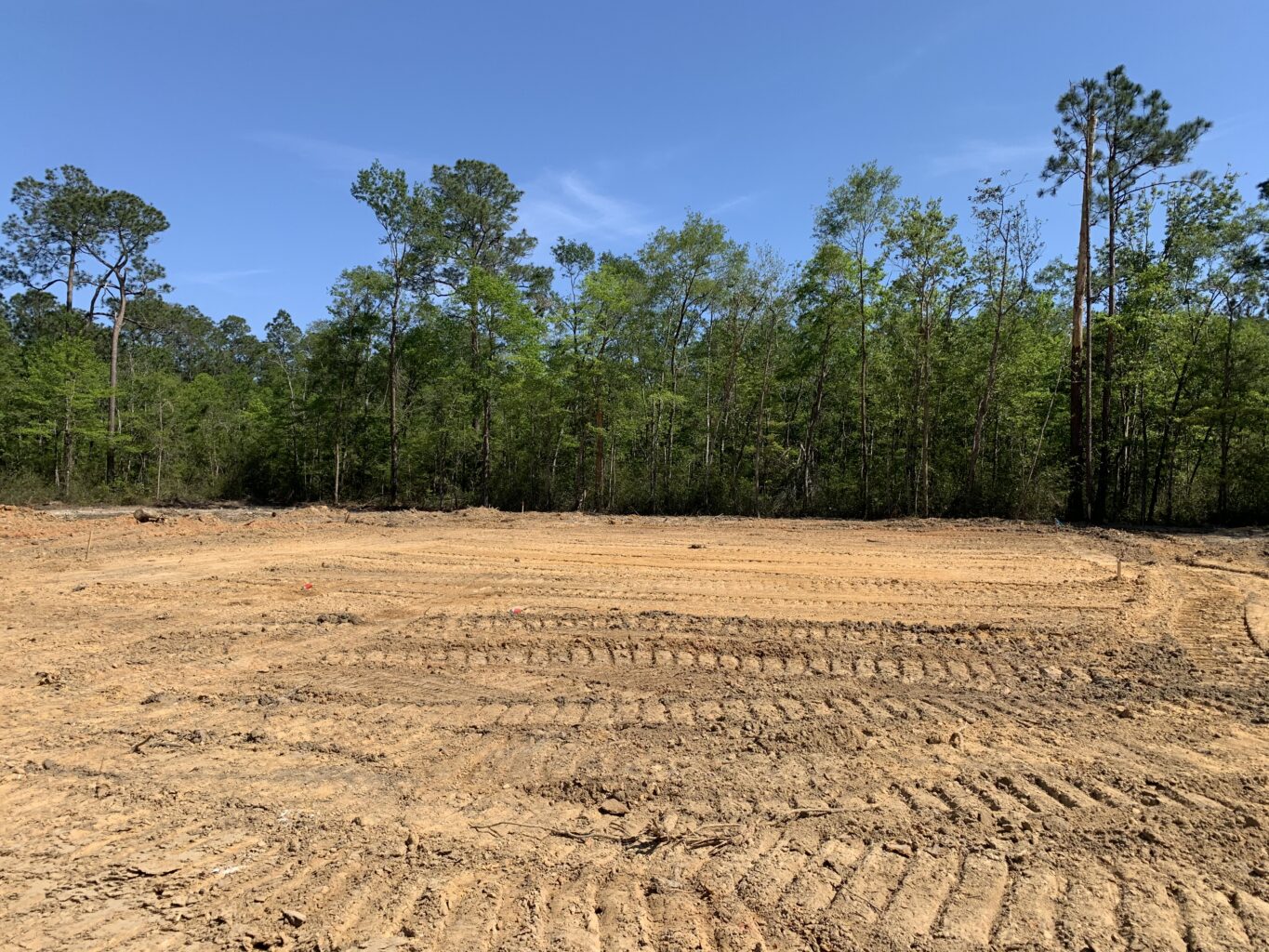
A building pad, driveway, or shop foundation is only as good as the ground underneath it, and around Rusk that means dealing with a specific soil profile: dark reddish-brown sandy loam over dense red clay that holds water and shifts if it isn’t properly cut, filled, and compacted before anyone pours concrete. Glass Finn LLC provides site preparation and grading throughout Rusk and Cherokee County, from home sites near Jim Hogg Park to commercial pads and shop sites off US Highway 69. We handle everything from initial clearing through rough grading, compaction, and finish grading so the surface drains correctly and holds its shape for years — not just until the first hard rain. Call (903) 216-5316 for a free estimate on your site prep and grading project.
What Site Preparation and Grading Actually Involve
Site preparation is the work that turns raw or recently cleared land into a stable, properly shaped base ready for a foundation, driveway, or pad — and grading is the part of that process that shapes and levels the ground to the elevations and drainage slopes the project needs. Before grading starts, most tracts around Rusk still have stumps, roots, and uneven ground left over from clearing, and the site needs a survey to identify high spots, low spots, and natural drainage before a single cut is made. Glass Finn LLC works the site in stages: rough grading first, using a bulldozer and motor grader to cut down high points and fill low ones according to the grading plan, followed by compaction in layers with a roller or compactor to remove air pockets and give the red clay subsoil common around Cherokee County the density it needs to support a structure without settling later. Finish grading follows, using a motor grader and laser-guided equipment to fine-tune slopes — typically around a 2% grade for pads and building sites — so water sheds away from the structure instead of pooling against a foundation. What starts as uneven, root-choked ground becomes a compacted, properly sloped surface ready for a slab, driveway base, or building foundation, with the drainage worked out before construction begins rather than discovered after the first storm.
Our Site Preparation and Grading Process
Step 1 — Site Survey and Grading Plan We start with a site walk and survey to identify existing elevations, drainage patterns, and soil conditions, then build a grading plan that maps where soil needs to be cut, filled, or left alone to hit your target elevations and slopes. For building sites, this plan is built around what your foundation contractor or builder needs — typically a specific pad elevation and a slope that carries water away from the structure.
Step 2 — Clearing and Rough Excavation Any remaining stumps, roots, rocks, or debris are cleared from the work area, and rough excavation begins — cutting down high points and moving that material to fill low spots using a bulldozer and excavator. This is the heavy-lifting phase of the job, where the site’s final shape gets established. Properties that haven’t been cleared yet typically start with our land clearing crew before grading begins.
Step 3 — Compaction in Layers Fill material is placed and compacted in lifts, typically six inches at a time, using a roller or plate compactor rather than dumped and packed all at once. Compacting in layers removes air pockets and gives Cherokee County’s clay-heavy subsoil the density it needs to support a slab or driveway without settling or cracking months later.
Step 4 — Finish Grading Once the site is at rough grade and compacted, we fine-tune the surface with a motor grader and laser-guided equipment, dialing in the final elevations and slopes — usually around 2% for pavement and pad areas — so water drains where it’s supposed to instead of collecting against a foundation or washing out a driveway.
Step 5 — Inspection and Handoff We walk the finished grade with you, or your builder or foundation contractor, to confirm elevations, slopes, and compaction meet the project’s requirements before any concrete work begins. A properly graded site means fewer surprises later — no standing water after a storm, no settling under a slab, and a stable base for whatever gets built next, including any excavation and trenching work still to come.
Serving Rusk and the Surrounding Area
Glass Finn LLC handles site preparation and grading work throughout Cherokee County, from residential home sites and shop pads inside Rusk to commercial and agricultural sites stretching out along US Highway 69 toward Jacksonville and US 84 toward Palestine. The region’s Nacogdoches soil series — sandy loam topsoil over dense red clay — behaves differently than the sandier soils found closer to the Gulf Coast, holding water longer and requiring more deliberate compaction to avoid settling under a driveway or foundation. We factor that into every grading plan rather than treating East Texas red clay the same way a crew might handle looser coastal soil. To see more of our site development work across the area, visit the Glass Finn LLC homepage.
Drainage planning matters as much as the grading itself in this part of Texas. Cherokee County’s humid subtropical climate brings heavy spring rain, and a pad or driveway graded without accounting for that runoff often shows problems within the first year — standing water, soft spots, or erosion along the edges. We build drainage slope into the grading plan from the start rather than treating it as an add-on.
Why Rusk Homeowners and Businesses Choose Glass Finn LLC
Glass Finn LLC brings 30 years of hands-on East Texas land and site work experience to every grading project, working with homeowners, builders, farm and ranch owners, and commercial clients across Cherokee County. Learn more about our team on our About page.
Because we handle clearing, grading, and excavation as one connected process rather than subcontracting each phase separately, there’s no gap between the crew that clears your land and the crew that grades it — no re-mobilizing equipment, no lost time waiting on a second contractor to show up. On projects disturbing an acre or more of soil, we help clients understand their obligations under the TCEQ Construction General Permit for stormwater and erosion control, which applies to most site development work of that size in Texas.
Every site prep and grading estimate is free, and we walk the finished grade with you before considering the job done.